 It was standing room-only (or sitting room-only for those on the floor) for Brand Journalism: The Rise of Non-Fiction Advertising. Moderator Bob Garfield promised me beforehand that he wasn’t planning on pulling any punches regarding the topic of brand journalism and why it does (or doesn’t) work. JWT North America CEO and Worldwide Digital Director David Eastman, PepsiCo’s head of digital Shiv Singh, JWT Senior Technology Editor Kyle Monson and GMD Studios President Brian Clark were kept on their toes.
Read more…
Scenes from the Salt Lick JWT BBQ Truck
 It was an interesting evening to be giving out free meat in Texas. We gave away hundreds of free Salt Lick sandwiches right around the block from the Driskill (which has officially become the Austin version of the Carlton at Cannes) as well as across from Emo’s on Red River.
To give you a flavor for what was going on, here were some choice tweets directed @jwtbbq:
@jwtbbq awesome #dinner
@jwtbbq where the meat is free and the living is good. Must tweet for meat.
I was expecting a Sausagefest at #SXSW but nobody expected this… #jwtbbq http://t.co/QjvGNMl
Overheard #jwtbbq: Guy to Projection Man, “so, are these lasers or what?”
Here is what the blogosphere has had to say about JWTBBQ: Adfreak, AdPulp and AgencySpy.
Now it is your chance to experience it for yourself tonight! The truck will be open for business at 9 p.m., 11 p.m. and 1 a.m. Check with @JWTBBQ for locations.
BBQ truck time!!
If you’re in Austin tonight, let @JWTBBQ know when you’re hungry. Salt Lick BBQ sandwiches could be on their way!
Ladies Love Furry Mascots

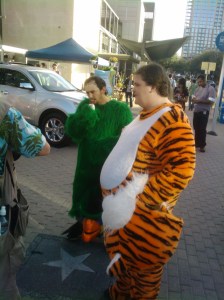
Now That’s Engagement + Experience
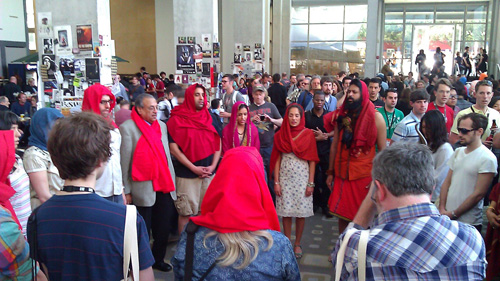
How about this: A publicity prayer circle to hype the new movie Kumare, debuting here at SXSW. The movie follows an enlightened guru who travels the world building followers (not the Twitter kind), while maintaining a double life as filmmaker Vikram Ghandi. The whole thing is a social experiment that seems to have been successful…he’s a prophet people want to spend time with, apparently.
There’s some kind of lesson here for marketers and brands, I’m sure.
Learn more about Kumare on the film’s web site.
Why Everything is Amazing and Nobody is Happy

[Another guest post from Thomas Siebert, VP at Digitaria]
Man, let’s hope my panel picking gets better.
“Why Everything is Amazing and Nobody is Happy,” might have been a very funny and mildly insightful comedy routine by Louis CK, but the panel that swiped its name for SXSWi was neither. In fact, it pretty much betrayed the central point of CK’s bit, which (if I understand him correctly) is that technology has spoiled us and you’re never going to find happiness through material objects.
Instead, the two-man bland who tried to connect with the SRO meeting room–as it experienced a sustained exodus that left it roughly half full–mostly tried to get audience members to suggest technologies that made them happy, made them better people.
There were backhanded acknowledgments of technological impatience and superficiality, but the core question that the panel title suggests was never seriously broached. Nobody even suggested that maybe there’s a difference between lasting happiness and superficial pleasure, that technology mostly speeds us up to ADD levels, and that perhaps everyone at their core understands that technology isn’t going to save us from the deeper, unsettling problems that aren’t being addressed–massive worldwide debt, global warming, increased discrepancies of haves and have nots, etc.–and, in fact, may be making them worse.
Douchebag Panels, and More!
[Here’s a post from Tom Siebert, VP at Digitaria]
Wow! SXSWi kicks off with TWO panels that drop the word “douchebag!” I passed on “How Not to be a Doucehbag at SXSW” (think I’ve got that one covered; I’m as charming and delightful company as I am humble and self-effacing). Picked instead “Help Save SXSW from Marketer Douchebaggery,” which is apparently not a pressing concern for many here, as the giant ballroom was probably only 10% full.
Note to everyone involved: If you’re going to give your panel such a provocative title, don’t fill it with people who are so gosh-darned NICE! You’d expect snark at something like this, instead we got earnest and helpful. One panelist actually said marketers should “Add value and provide a good experience.” I’ll take another cup o’ bland, please!
Meanwhile, behind them, about 1/3 of the SXSW banner hoisted behind them was festooned with about a dozen event sponsors, while another panelist lamented how supersaturation has pretty much pushed most start ups out of the picture — so what’s wrong with this one?
Related Articles
- Overheard at SXSW (adgeek.us)
- Follow Digitaria @ SXSW! (digitaria.com)

 Ad+Geek